FAQs Cavity Wall Insulation
There are 2 pathways to qualify for a cavity wall insulation grant in Bristol.
1. The General Group
To qualify under this group, you must meet two key criteria:
There is no income threshold, and you do not need to receive any Government benefits.
Council Tax Band: In England, your property must be in bands A, B, C or D. In Wales, it must fall under bands A to E.
You can check your council tax band on the Gov.UK website. ✔
Energy Performance Certificate (EPC) Rating: Your property must have an EPC rating of D, E, F, or G, which can be verified on
the EPC Register. ✔
You do not need an EPC to apply for the grant. We will produce an EPR (an unregistered EPC) as a part of the process. But it will need to be in bands A, B, C or D.
These conditions apply to homeowners and private renters (with the landlord’s consent).
However, private tenants must also receive a qualifying benefit to be eligible for free cavity wall insulation and loft insulation, and the EPC rating of the property must be a D or E. F or G-rated rented properties must have a legal exemption registered to qualify.
2. The “Low Income” Group
To qualify through this group, you need to be receiving one of the following benefits, and your EPC rating must be D, E, F, or G:
Pension Credit
Income-Based Job Seekers’ Allowance
Universal Credit (no income threshold)
Income-Related Employment and Support Allowance
Tax Credits (Working and Child Tax Credits – no income threshold)
Income Support
Housing Benefit (newly added)
Child Benefit/Family Allowance (with income thresholds based on the number of children in the household)
Child Benefit Qualification Matrix: Your household income must be below the following thresholds:
Children 1 Adult 2 Adults
— 1 — £19,900 – £27,500
— 2 — £24,800 – £32,300
— 3 — £29,600 – £37,200
— 4 — £34,500 – £42,000
To find out if you qualify, or to book a free no-obligation survey, complete our enquiry form or give us a call
Complete Enquiry Form
or call us on 0800 8 10 10 60 or 07960 799681 and speak to one of our cavity wall experts.
FAQs Cavity Wall Insulation
We take care of everything for you, so you don’t have to worry about any paperwork.
During the survey, we manage the entire grant application process and verify your eligibility.
Once the work is finished, we request the grant funds, which are paid directly to us.
All you need to do is relax and enjoy your reduced energy bills and a smaller carbon footprint!
To find out if you qualify, or to book a free no-obligation survey, complete our enquiry form or give us a call
Complete Enquiry Form
or call us on 0800 8 10 10 60 or 07960 799681 and speak to one of our cavity wall experts.
FAQs Cavity Wall Insulation
If you have noticed damp patches on the inside of your external walls, it’s crucial to address these before proceeding with any insulation installation.
If a property suffers from damp, it will fail the CAS (Cavity Assessment Survey), and cavity wall insulation will not be installed under the Great British Insulation Scheme (GBIS).
This is because, to qualify for a grant, a 25-year guarantee must be issued, which is only possible if the property passes the survey. If the property has damp, it will fail the CAS survey, and no grant will be approved—plain and simple.
However, if you see “black mould or spots,” this is likely caused by condensation rather than structural damp.
In about 90% of cases, condensation results from lifestyle factors, such as inadequate ventilation or drying clothes indoors, rather than issues with the building itself.
Cavity wall insulation can help mitigate this by keeping the internal walls warmer, which can reduce or even eliminate black mould caused by condensation.
To find out if you qualify, or to book a free no-obligation survey, complete our enquiry form or give us a call
Complete Enquiry Form
or call us on 0800 8 10 10 60 or 07960 799681 and speak to one of our cavity wall experts.
FAQs Cavity Wall Insulation
To find out if you qualify, or to book a free no-obligation survey, complete our enquiry form or give us a call
Complete Enquiry Form
or call us on 0800 8 10 10 60 or 07960 799681 and speak to one of our cavity wall experts.
FAQs Cavity Wall Insulation
Yes, the UK Government Grant Scheme is called the Great British Insulation Scheme.
To meet their significant legal targets for reducing carbon emissions, the government has passed the responsibility to energy providers through a legal obligation known as the Energy Company Obligation (ECO).
Under this scheme, gas and electricity companies are required to take action to help lower carbon emissions.
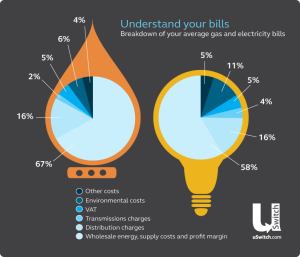
We all contribute to this initiative through our fuel bills, as part of what’s called the “green levy” – 6% of gas bills and 11% of electricity bills go towards this fund. The energy companies then use this money to fund ECO grants, including schemes like free cavity wall insulation.
So, while the insulation itself may seem free, we’re indirectly funding it through our energy bills, as is often the case.
To find out if you qualify, or to book a free no-obligation survey, complete our enquiry form or give us a call
Complete Enquiry Form
or call us on 0800 8 10 10 60 or 07960 799681 and speak to one of our cavity wall experts.
FAQs Cavity Wall Insulation
The simple answer is, “I can’t tell you without conducting a survey.” However…
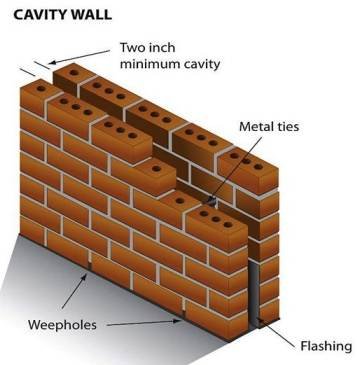
If your home was built after 1925, there’s a good chance it has external walls consisting of two layers of brick with a gap (cavity) between them, held together by wall ties. This is referred to as a cavity wall.
Free cavity wall insulation in Bristol fills this gap, which helps retain warmth, saves energy, and may also reduce or eliminate condensation inside your home, particularly if your external walls are prone to moisture problems.
Your home will likely be suitable for free cavity wall insulation if:
•The external walls have unfilled cavity walls.
•The cavity is at least 50mm wide.
•The brickwork or masonry is in reasonably good condition.
However, it’s not quite as simple as that.
Part of the process includes a Cavity Assessment Survey (CAS), which is administered and audited by the Installation Assurance Authority (IAA). This thorough survey assesses the suitability of the walls for insulation.
During the survey, small test holes are drilled into each wall elevation, and a borescope (a special camera) is used to inspect the cavity, taking photographs and measuring the depth, etc.
The walls are carefully examined for issues such as cracks, unfilled holes, or other remedial work that must be addressed before insulation can proceed. Gutters and downpipes are also inspected to check for leaks, blockages, and proper drainage.
This free-of-charge survey takes around two hours to complete, after which the report and photos are uploaded to the IAA platform for auditing.
This survey and inspection process ensures that properties are suitable for insulation under the new free Cavity Wall Insulation Grant scheme, which includes enhanced quality control measures to prevent issues.
To find out if you qualify, or to book a free no-obligation survey, complete our enquiry form or give us a call
Complete Enquiry Form
or call us on 0800 8 10 10 60 or 07960 799681 and speak to one of our cavity wall experts.
FAQs Cavity Wall Insulation
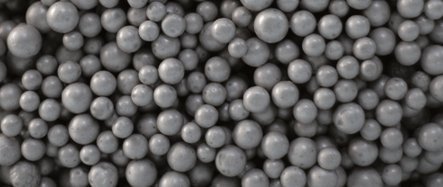
We exclusively use “SuperBead” polystyrene beads for cavity wall insulation, not mineral fibre options like “RockWool.”
Here’s a 6-minute video demonstrating how cavity walls are insulated and explaining why “SuperBead” does not cause damp.
Polystyrene beads are a superior insulation material for cavity walls, though they are more expensive. “SuperBead” cavity wall insulation is certified for several important properties:
Thermal Efficiency: “SuperBead” boasts a thermal conductivity of 0.035, making it highly effective in retaining heat.
Water Resistance: It resists water transfer across the cavity, preventing dampness.
Condensation Control: By keeping internal walls warmer, it helps reduce the risk of condensation.
Fire Safety: “SuperBead” does not compromise the fire resistance of the walls.
Durability: It is long-lasting, rot-proof, and water-resistant, remaining effective throughout the building’s lifetime.
Compared to fibre insulation, “SuperBead” is up to 20% more efficient. When installed, it’s blown into the cavity with an adhesive that sets within 20 minutes.
This process requires about 30% fewer and smaller holes than fibre insulation, creating a solid blanket of polystyrene that reduces heat loss by approximately 70%.
The polystyrene beads are rigorously tested, fire-resistant, and certified by the BBA for use in extreme conditions.
As part of the installation process, we conduct a Cavity Assessment Survey (CAS) to ensure your walls are suitable for insulation.
This is part of the improved quality control standards under the Great British Insulation Scheme (GBIS), formerly the free Cavity Wall Insulation Grant scheme.
To find out if you qualify, or to book a free no-obligation survey, complete our enquiry form or give us a call
Complete Enquiry Form
or call us on 0800 8 10 10 60 or 07960 799681 and speak to one of our cavity wall experts.
FAQs Cavity Wall Insulation
Filling cavity walls is not a job you can do yourself.
We do the job in around 2-3 hours for an average house with easily accessible walls. It is simple, quick, and with no mess.
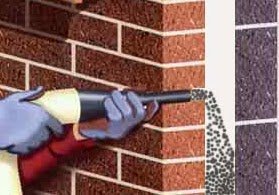
We drill small holes (about 22mm in size) in the outside walls of your home. The holes are about 1 metre apart. We always insulate from the bottom up.
The exact pattern of the holes is laid down in the British Board of Agrement (BBA) Certificate, which is issued for the material that is being used to insulate the walls.
We always use polystyrene beads.
We then blow the insulation into the cavity using special equipment.
Once all the insulation is in, we fill the holes in the brickwork with cement. It is then colour-matched to the render or mortar, so you’ll barely notice them.
Our Installers are among the best in the business. They have been insulating cavity walls for the past 45 years. You will have a first-class result with the minimum of fuss and disruption.
Most of our customers are amazed at how quickly and neatly this operation can be carried out.
Our work is also guaranteed for 25 years by CIGA – the Government-backed Cavity Insulation Guarantee Agency.
Cavity Wall Insulation Bristol can reduce the amount of heat escaping from your walls by 70%. It can also reduce CO2 emissions by up to 3 tonnes per year.
To find out if you qualify, or to book a free no-obligation survey, complete our enquiry form or give us a call
Complete Enquiry Form
or call us on 0800 8 10 10 60 or 07960 799681 and speak to one of our cavity wall experts.
FAQs Cavity Wall Insulation
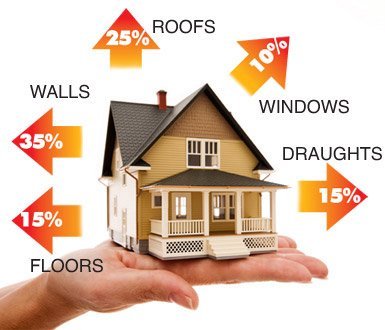
Yes, Cavity Wall Insulation in Bristol will reduce your fuel bills.
These are the percentages of heat loss through the different parts of a house.
Walls = 35%.
Roof = 25%.
Floor = 15%.
Draughts = 15%
Windows = 10%
Cavity Wall Insulation will reduce the heat loss from the wall by 70%.
For a 3-bed semi-detached house on mains gas, this would amount to about £450 per year (based on an average usage). For other fuels such as Oil, Coal, LPG and Electricity, the savings would be considerably more.
It can also help reduce/eradicate Condensation.
It can also reduce carbon emissions by up to 3 tonnes per year, therefore reducing your carbon footprint.
The Government regards cavity wall insulation as “the most effective energy savings measure that most people can carry out on their homes” and a major contributor to reducing carbon emissions.
To find out if you qualify, or to book a free no-obligation survey, complete our enquiry form or give us a call
Complete Enquiry Form
or call us on 0800 8 10 10 60 or 07960 799681 and speak to one of our cavity wall experts.
FAQs Cavity Wall Insulation
Yes, it comes with a 25-year guarantee issued by the Cavity Insulation Guarantee Agency (CIGA).
The Cavity Insulation Guarantee Agency provides independent 25-year guarantees for Free Cavity Wall Insulation in Bristol.
However, they will only issue a guarantee if the property has passed a CAS survey (cavity assessment survey).
A grant will not be allowed unless a CIGA guarantee is issued.
CIGA was established in consultation with the Government’s Energy, Environment and Waste Directorate (a division of DETR) to provide householders with an independent, uniform and dependable guarantee covering defects in materials and workmanship.
Independent research carried out for the Department of the Environment, Transport and the Regions (DETR) has confirmed that cavity wall insulation is a very reliable process.
Problems are therefore extremely rare, but if they do occur, CIGA has the expertise to ensure that they are swiftly rectified. The new CAS survey will also reduce the potential for future problems by only insulating walls that are suitable.
CIGA also operates and administers the Cavity Wall Insulation Self Certification scheme (CWISC) in association with the British Board of Agrément. The scheme provides homeowners with the comfort of knowing that work by registered contractors complies with the requirements of the Building Regulations.
To find out if you qualify, or to book a free no-obligation survey, complete our enquiry form or give us a call
Complete Enquiry Form
or call us on 0800 8 10 10 60 or 07960 799681 and speak to one of our cavity wall experts.
FAQs Cavity Wall Insulation
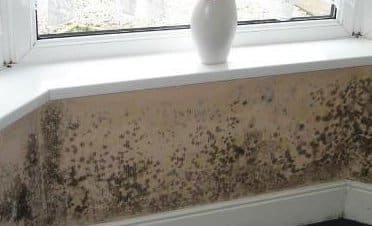
Yes, cavity wall insulation can help reduce condensation.
Condensation is caused by moist air coming in contact with a cold surface. The warmer the air, the more moisture it can hold.
When that warm, wet air comes in contact with a cold surface, the temperature of the air reduces, and it releases some of its moisture onto the colder surface.
If the cold surface is not dried, it can give rise to black mould.
When the cavity walls are insulated, the walls inside the house are warmer and are less likely to cause condensation.
So cavity wall insulation in Bristol can reduce/eradicate condensation and black mould.
To find out if you qualify, or to book a free no-obligation survey, complete our enquiry form or give us a call
Complete Enquiry Form
or call us on 0800 8 10 10 60 or 07960 799681 and speak to one of our cavity wall experts.
FAQs Cavity Wall Insulation
According to the Cavity Insulation Guarantee Agency, damp problems arise in 3 houses out of every 1,000 insulated.
The problems of damp and cavity wall insulation (CWI) are virtually all historical and were caused by inappropriate insulation being put into inappropriate walls.
Rockwool was the main insulation material used for Cavity Wall Insulation Bristol. This has now been replaced by polystyrene bead, which is a much better material for Cavity Wall Insulation. See the 5-minute video here.
Even so, when polystyrene beads were first used, they used the little white soft polystyrene beads, just like the ones found in “bean bags”. In some cases, these also caused issues, mainly due to their small size, structure, and not being very good at repelling water.
Today, larger grey polystyrene beads, shaped like half a coffee bean or a mix of differently sized beads, are used. These beads are also impregnated with a water repellent.
But the main problem was caused by salespeople knocking on doors, telling people they could have cavity wall insulation for free, and then not carrying out a full pre-installation survey. As a result of this, houses that should never have been insulated were insulated.
A massive improvement in quality control
In April 2017, the British Board of Agrément (BBA) was put in charge of ensuring that “inappropriate” houses should not be insulated. This gave birth to the Cavity Assessment Surveillance Scheme (CASS).
The BBA are the body responsible for certifying that building materials are “fit for purpose”. They lay down how building materials should be used within the certificate that they issue for that material.
In October 2018, CIGA took over the helm of this scheme.
CASS involves a full survey of the property to be insulated, which takes about 2 hours to complete. The survey of your property includes, but is not limited to, camera shots of the inside of the cavity and other factors which may make a property inappropriate to insulate.
These would include factors such as the age of the property, condition of the walls, depth of cavity, construction type, condition of gutters and downpipes, and rubble in the cavities, including ventilation, etc. Leaky gutters and downpipes are one of the main causes of damp in homes.
The photographs and other data are then uploaded onto the CIGA platform for auditing. Every survey is audited by CIGA at desktop level.
1 in 10 are audited with a visit to the property by a CIGA surveyor to audit the survey that had been carried out.
“This level of ‘quality control’should resolve the historical problem of insulating inappropriate properties, and therefore reduce the potential for damp being caused by Cavity Wall Insulation.”
Up to 2017, CIGA states that there could be problems in 3 out of every 1,000 properties that have had CWI installed, but the CASS survey should greatly reduce this figure even further.
To find out if you qualify, or to book a free no-obligation survey, complete our enquiry form or give us a call
Complete Enquiry Form
or call us on 0800 8 10 10 60 or 07960 799681 and speak to one of our cavity wall experts.
FAQs Cavity Wall Insulation
Cavity wall insulation offers several key benefits, including:
Energy Efficiency: It reduces heat loss, helping to maintain a comfortable indoor temperature with less heating, which lowers energy bills.
Cost Savings: By reducing the need for heating, insulation leads to long-term savings on energy costs.
Increased Comfort: Insulation minimizes drafts and cold spots, creating a more even, comfortable indoor climate throughout the year.
Environmental Impact: Improved energy efficiency means fewer carbon emissions from heating, reducing your home’s environmental footprint.
Condensation Control: By keeping internal walls warmer, insulation helps prevent or eradicate condensation, reducing the risk of damp and mold.
Property Value: Energy-efficient upgrades like cavity wall insulation can increase your home’s value, as energy efficiency is a growing priority for buyers.
Noise Reduction: It also acts as a sound barrier, reducing outside noise—a bonus for homes in busy or noisy areas.
Quick Installation: Installation is fast and causes minimal disruption, typically taking about three hours for a semi-detached house.
To find out if you qualify, or to book a free no obligation survey, complete our enquiry form or give us a call
Complete Enquiry Form
or call us on 0800 8 10 10 60 or 07960 799681 and speak to one of our cavity wall experts.
FAQs Cavity Wall Insulation
Not all cavity wall homes are suitable for insulation.
Before 1920, most houses were constructed with solid walls made from either stone or solid brick—essentially two bricks laid side by side.
Solid walls were more susceptible to damp, which often caused serious health issues such as pneumonia, posing significant risks to residents.
To address these problems, cavity walls were introduced. These consist of two brick walls with a gap (or cavity) between them. They are held together with wall ties.
This construction method became increasingly common in the 1920s and was standard practice by the 1930s. Although most homes built after 1930 are likely to be suitable for cavity wall insulation, a professional survey is always essential to confirm suitability.
There are three main exceptions:
Concrete properties – Often former council houses, these may have unfilled cavities. Insulating them can cause structural problems, including “Concrete Cancer,” making them unsuitable.
Timber-framed properties – These have a wooden structural frame behind a brick exterior, with insulation already integrated. Adding more cavity wall insulation is not necessary and may be harmful.
Homes built after 1982 – Building regulations required insulation to be installed during construction from this point onward.
However, many homes built during the 1980s, 1990s, and even early 2000s were left without insulation. These may still benefit from cavity wall insulation, but only after a proper assessment.
To find out if you qualify, or to book a free no-obligation survey, complete our enquiry form or give us a call
Complete Enquiry Form
or call us on 0800 8 10 10 60 or 07960 799681 and speak to one of our cavity wall experts.
FAQs Cavity Wall Insulation
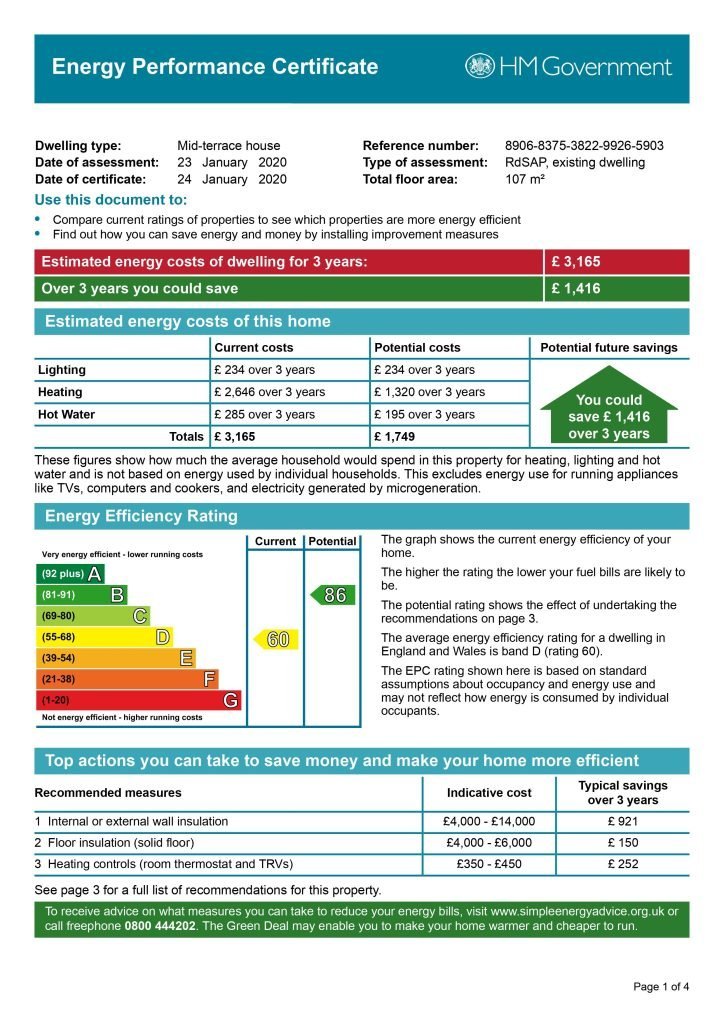
EPC stands for Energy Performance Certificate.
If a property is being sold or if it is rented, it will require an EPC.
They were introduced on the 1st August 2007. So, if you bought your property before that date, you won’t have an EPC.
They are good for 10 years. So you could sell a property with a 7-year-old EPC, but it wouldn’t necessarily reflect the energy efficiency of the property on the day it’s sold. There is talk of reducing the life of an EPC to 5 years.
The EPC rating is a measure of the cost of heating the house and hot water, based on 2.5 occupants. The rating will fall into a banding of A to G. A is the best, and G is the worst.
In June 2025, a lot of changes took place with regard to the input data to make the EPC far more accurate.
If you don’t have an EPC, you can still apply for a Cavity Wall Insulation grant. As a part of the process, we will produce an EPR (Energy Performance Rating), which is an unlodged EPC.
To find out if you qualify, or to book a free no-obligation survey, complete our enquiry form or give us a call
Complete Enquiry Form
or call us on 0800 8 10 10 60 or 07960 799681 and speak to one of our cavity wall experts.
FAQs Cavity Wall Insulation
If you don’t have an EPC (Energy Performance Certificate), you can still apply for a Cavity Wall Insulation grant using The Great British Insulation Scheme.
As a part of the required survey, we produce an EPR (Energy Performance Report). An EPR uses the same dataset as an EPC, but it is not registered, and you don’t get a certificate.
So, you don’t need to have an EPC!
To find out if you qualify, or to book a free no-obligation survey, complete our enquiry form or give us a call
Complete Enquiry Form
or call us on 0800 8 10 10 60 or 07960 799681 and speak to one of our cavity wall experts.
FAQs Cavity Wall Insulation
You will need to be in receipt of a qualifying benefit.
Here is the list of Qualifying Benefits.
Pension Credit
Income-Based Job Seekers’ Allowance
Universal Credit – No income threshold
Income-Related Employment and Support Allowance
Tax Credits (including Working and Child Tax Credits) – No income threshold
Income Support
Housing Benefit – NEW
Child Benefit/Family Allowance. Income Thresholds apply – see table below.
These are gross (before stoppages) thresholds.
Children 1 Adult 2 Adults
1 £19,900 £27,500
2 £24,800 £32,300
3 £29,600 £37,200
4 £34,500 £42,000
To find out if you qualify, or to book a free no obligation survey, complete our enquiry form or give us a call
Complete Enquiry Form
or call us on 0800 8 10 10 60 or 07960 799681 and speak to one of our cavity wall experts.
FAQs Cavity Wall Insulation
If you can’t find your question above, please call us on 0800 8 10 10 60 or 07960 799681 and speak to one of our cavity wall experts.
